Showing posts with label A2. Show all posts

Friday, 21 March 2014

POMO MixTape / Music Non Stop

Click image to download playlist.
Boing, Boom, Tschak. Music Non Stop. Techno Pop.
A playlist celebrating the diversity of popular music, dance beats, twangy guitar riffs, synths and eclectic sounds.

Track-listing:

1. Biting Down / Lorde
Listen to the beats resound.

2. Wood Beez (Pray Like Aretha Franklin) / Scritti Politti
Because I wish I'd lived through the 80s and sophisti-pop.

3. Let's Dance / David Bowie
Just... put on your red shoes and dance the blues.

4. The Dream / The Cure
"Japanese Whispers" - Tolhurst switched from drums to keyboards and never looked back.

5. Off To The Races / Lana Del Rey
"Lolita got lost in the hood."

6. Nothing Bad Ever Happens To Me / Oingo Boingo
Danny Elfman's ska-influenced new wave octet. Need I say more?

7. So Far... / Eminem
Guess who's [back] exploring sub-reggae, grabbing Joe Walsh's "Life's Been Good"???

8. Music Non Stop / Kraftwerk (The Mix)
This should be pretty self-explanatory by now... 

9. Kristine / Sky Ferreira
Ska/grunge/noise/psychedelia? I don't know what it is. But it's great.

10. Peek-A-Boo / Siouxsie and the Banshees
"It sounded like nothing else on this planet."

11. House Of Balloons / The Weeknd
"Happy House" is worked into a softly anthemic slow-burn number full of diva-ish vocals tied to a chilly beat."

12. No Church In The Wild / Jay-Z & Kanye West (Frank Ocean, The-Dream)
 "The listener enters a bejewelled realm, one filled with musings on the spoils of riches and the chaos that accompanies it."

13. True Faith / New Order
*slap* *slap* *slap* *slap* *slap-slap-slap-slap-slap* *slap-slap-slap-slap-slap-slap-slap*

14. Full Of Fire / The Knife
Uncomfortable and disturbing, but in a good way. 

15. Daily Routine / Animal Collective
It sounds as good as the illusory cover looks.

16. "You Fuckin' Die...!" / Pixies
...It didn't have anything to do with anything.

17. Eminence Front / The Who
"This song is about what happens when you take too much white powder."

Tuesday, 11 March 2014

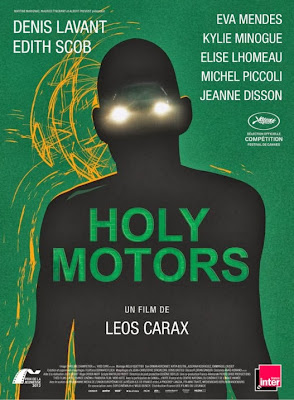
Holy Motors: A Critical Perspective

http://biblioklept.org/2012/11/21/holy-motors-is-a-strange-cinematic-prayer/
Click image for article.

Holy Motors Is A Strange Cinematic Prayer

BY EDWIN TURNER

Wednesday, 5 March 2014

Criticisms of Postmodernism (James Rosenau)


Rosenau (1993) identifies seven contradictions in Postmodernism:

1. Its anti-theoretical position is essentially a theoretical stand.
2. While Postmodernism stresses the irrational, instruments of reason are freely employed to advance its perspective.
3. The Postmodern prescription to focus on the marginal is itself an evaluative emphasis of precisely the sort that it otherwise attacks.
4. Postmodernism stress intertextuality but often treats text in isolation.
5. By adamently rejecting modern criteria for assessing theory, Postmodernists cannot argue that there are no valid criteria for judgment.
6. Postmodernism criticizes the inconsistency of modernism, but refuses to be held to norms of consistency itself.
7. Postmodernists contradict themselves by relinquishing truth claims in their own writings.

Postmodern Audiences


The impact of postmodern media on audiences and the ways in which we think about texts:

How do post-modern media texts challenge traditional text-reader relations and the concept of representation? In what ways do media audiences and industries operate differently in a post-modern world? 
  • Have audiences become accustomed to the stimulation and excitement of spectacular films/games and a sense of spectacle has become something that (young?) audiences increasingly demand from cultural experiences?
  • Has narrative coherence become less important for audiences?
  • In terms of ideas, has cultural material become more simplistic and superficial, and audiences are no longer so concerned with the process of understanding a text? Think here about a film like Moulin Rouge where the plot is in some sense irrelevant to the overall impact of the film.
  • Has the attention span of audiences reduced as they become increasingly accustomed to the spectacle-driven and episodic nature of postmodern texts?
  • In its ‘waning of affect’, has postmodernism contributed to audiences become emotionally detached from what they see? They are desensitised and unable to respond ‘properly’ to suffering and joy.
  • Has postmodernism contributed to a feeling among audiences that arts and culture does not really have anything to tell us about our own lives and instead simply provides us with somewhere we can escape or retreat to?
Postmodernism and Audience Theory

Two commentators have developed some interesting ideas about postmodernism and audiences.

Alain J.-J. Cohen has identified a new phenomenon in the history of film, the ‘hyper-spectator’. ‘Such spectator, who may have a deep knowledge of cinema, can reconfigure both the films themselves and filmic fragments into new and novel forms of both cinema and spectatorship, making use of the vastly expanded access to films arrived at through modern communications equipment and media. The hyper-spectator is, at least potentially, the material (which here means virtual) creator of his or her hyper-cinematic experience’ (157)

‘VCRs and laserdisc-players or newer DVDs have produced, and are still producing, a Gutenberg-type of revolution in relation to the moving image.’

Anne Friedberg has argued that because we now have much control of how we watch a film (through video/dvd), and we increasingly watch film in personal spaces (the home) rather than exclusively in public places, ‘cinema and televison become readable as symptoms of a “postmodern condition”, but as contributing causes.’ In other words, we don’t just have films that are about postmodernism or reflect postmodern thinking. Films have helped contribute to the postmodern quality of life by manipulating and playing around with our conventional understanding of time and space. ‘One can literally rent another space and time when one borrows a videotape to watch on a VCR….the VCR allows man to organize a time which is not his own…a time which is somewhere else – and to capture it.’

Anne Friedberg: ‘The cinema spectator and the armchair equivalent – the home-video viewer, who commands fast forward, fast reverse, and many speeds of slow motion, who can easily switch between channels and tape; who is always to repeat, replay, and return – is a spectator lost in but also in control of time. The cultural apparatuses of television and the cinema have gradually become causes for what is now…described as the postmodern condition.’

Postmodern & Media Industries

Whereas modernism was generally associated with the early phase of the industrial revolution, postmodernism is more commonly associated with many of the changes that have taken place after the industrial revolution. A post-industrial (sometimes known as a post-Fordist) economy is one in which an economic transition has taken place from a manufacturing-based economy to a service-based economy. This society is typified by the rise of new information technologies, the globalization of financial markets, the growth of the service and the white-collar worker and the decline of heavy industry.

Postmodernism and the Film Industry

It has been argued that Hollywood has undergone a transition from ‘Fordist’ mass production (the studio system) to the more ‘flexible’ forms of independent production characteristic of postmodern economy.

The incorporation of Hollywood into media conglomerates with multiple entertainment interests has been seen to exemplify a ‘postmodern’ blurring of boundaries between industrial practices, technologies, and cultural forms.

Monday, 24 February 2014

1a Topics

  • Creativity
  • Digital technology
  • Research and planning
  • Post Production
  • Real Media Conventions

Wednesday, 12 February 2014

"Drive" Intro in Grand Theft Auto: Vice City


Fan-made video using GTA: Vice City footage to adhere to Winding-Refn's opening scene in "Drive".
(Music by Kavinsky - Nightcall (feat. Lovefoxxx))

"Cool Short Film Puts Ryan Gosling Inside Two Grand Theft Auto Games"


"What’s the mystery connection between Grand Theft Auto IV and Grand Theft Auto V? It might be Ryan Gosling’s no-name character from Drive. Gamebill Studio’s Nabil Ayari captured footage from GTA IV and GTA V and stitched them together with shots from the 2011 miniimalist action thriller. The result? A moody, well-edited clip that throws the cities, characters and tension from three different worlds of criminals into one smooth heist. Well, until the end anyway."

Cited by Evan Narcisse

Ryan Gosling’s "Drive" Jacket Is In GTA V?


"It was the film that inspired a million man-crushes, countless Halloween costumes and now, the biggest game of the year. Yes, Ryan Gosling's iconic jacket from the film Drive makes a guest appearance in Grand Theft Auto V. Dubbed the "champagne Driver blouson", the silver-and-brown bomber is emblazoned with a yellow crab - a nod to the film's scorpion - and can be purchased by Trevor in the discount stores of Blaine County. (Although we'd have thought, as the team's driver, it would be more suited for Franklin). Hijack a Mustang-esque Dominator and equip yourself the hammer (it's available as a weapon in the Special Edition version) for full Gosling effect. Our only complaint? That Kavinsky's "Nightcall" is missing from the soundtrack, so you'll have to make do with Kendrick Lamar."

By Oliver Franklin

Drive: "The Greatest Grand Theft Auto Film There Will Never Be"

drive-poster.jpg

"Every couple of months, rumours of an impending video game-to-movie adaptation of the Grand Theft Auto series rears its head. And with good reason; taking their cues from iconic gangster flicks from the silver screen, RockStar Game's infamous crime sims have become very cinematic (particularly Grand Theft Auto 4), and as much about weaving a deep and considered morality-challenging story as they are indulging our desires to drive fast and blast guns.

I for one had eagerly been awaiting news of an almost inevitable GTA film.

But I won't be any more. Last night I saw Drive, the latest movie from Nicolas Winding Refn. Full of car chases, heists, gangsters, neon lights and nail-biting tension, it's everything a great Grand Theft Auto film could be and should be. It's so good as to warrant any GTA movie-pipe-dreams wholly irrelevant. It ticks all the boxes. Here's why:

1) Ryan Gosling's nameless driver is every bit the brooding GTA anti-hero

Drive centres around Ryan Gosling as a nameless, Hollywood stunt driver. He's the best in the business, and makes a fair bit of cash on the side moonlighting as a wheelman for robberies. Just like GTA IV's Niko Belic, he's as cool as ice and doesn't flinch when forced into a dangerous, potentially violent situation. However, just like Niko, Gosling's driver is also a complex man whose slow-burning romance with his vulnerable neighbour Irene (played by Carey Mulligan) force him into an abyss of underworld trouble. Despite both characters' dubious actions, we cant help but sympathise with Niko and the driver.

2) Both are effortlessly stylish and cool

We all know that a life of crime doesn't pay, and both GTA and Drive go a long way towards cementing how destructive a lifestyle it can be. That doesn't stop it from being alluring though, and both GTA and Drive know this too. From Gosling's monosyllabic phrasing to his trend-setting wardrobe, the tooth-pick chewing driver cuts a very James Dean-style figure. Likewise the LA setting, sports cars, neon lights and 80's synth-inspired soundtrack hand picks all the greatest excesses of cult gangster flicks. GTA over the years has likewise styled itself as the premier "cool" game, always highlighting the hippest artists on its soundtrack, tipping its cap to the best gangster cinema has to offer and always oozing a "don't give a f*ck" attitude.

grand-theft-banner.JPG

3) Both have smoking-hot cars

I'm not much of a car man, truth be told. But even I can appreciate the sleek lines of a Chevy or a Mustang, as seen in Drive. Though it doesn't have real world cars, Grand Theft Auto is, as its title suggests, all about storming down the highway in a stolen sports car. If you like the sound of a revving super car engine, both Drive and GTA will be right up your street.

4)The soundtracks for GTA and Drive are so, so good

The quality of the Grand Theft Auto series soundtracks are well documented. From Blondie to Michael Jackson in Vice City, to Les Savy Fav and Justice in GTA IV, RockStar have their finger on the pulse not only in terms of songs that get the blood pumping when speeding down the highway, but also those that perfectly evoke the feelings of the setting and era that the games are trying to recreate. Drive, though set in the present day, is clearly inspired by 1980s aesthetics, and the soundtrack likewise reflects this to stunning effect. Tracks by College, Desire and Kavinsky add a hauntingly icy accompaniment to the shocking events on screen, every bit as memorable as the footage they support.

5) Both are shockingly, but fittingly, violent

Whether you sit on the side of the fence that brands GTA excessively violent, or the side that sees it as a fitting representation not only of the dangers of the underworld lifestyle but also clearly inspired by the gritty Goodfellas and Godfather flicks, there's no denying the series has spilled a fair bit of blood. Likewise, Drive is punctuated by a few scenes of intense violence. Like, REALLY intense. However, in both GTAs story missions and the plot and characterisation of Drive, it never feels out of place considering the unique pressures the characters are put under.

This list could go on and on, but at the end of the day, I just wanted to highlight how great a film Drive is, and how much fans of the Grand Theft Auto series will enjoy it. The fact that GTA has become so massively popular means that any potential movie probably couldn't indulge the same art-house tendencies that Nicolas Winding Refn's film does, which is a crying shame as the genuinely beautiful moments in Drive make its bloodier scenes all the more harrowing. Any GTA film would now undoubtedly become a dumb exercise in "The Fast and The Furious" style car porn.

Head down to your local multiplex and catch Drive if you can; I defy you not to go home afterwards and immediately want to go for a spin around Vice or Liberty City in GTA."

By Gerald Lynch

Monday, 10 February 2014

Nightcall - Kavinsky & Lovefoxxx

Drive: Ending Explained


"If you’re reading this, then you’ve already had the chance to watch Nicolas Winding Refn’s pulpy crime-drama Drive, and hopefully enjoyed it as much as we did (be sure to read our Drive review).
Though Drive seems like a standard action/thriller (albeit with some art house style and flare), a lot of movie goers have walked away with questions about the movie’s final moments, which leave a fair amount of ambiguity hanging over the fate of “Driver,” the character played by Ryan Gosling.
In the past with our Shutter Island and Inception Ending Explanations, we here at Screen Rant have had to rely on our prowess as movie aficionados in order to form some logical deductions about what transpired in some of our favorite mind-bending movies, and what filmmakers intended with their ambiguous endings. In the case of Drive, however, we were fortunate enough to snag an explanation right from the primary source: director Nicolas Winding Refn.
When we last see Driver – bleeding out while behind the wheel of his car, before pulling himself together and speeding off into the night – there is a certain amount of lingering doubt about the literalness vs. figurativeness of what we are seeing. When I asked Refn first-hand what the ending of Drive was all about, I expected the typically coy filmmaker to hand me an equally coy answer. However, he was surprisingly straight forward in his response:
“Well all my films always have open endings. All of them. Because I believe art is always best when…you talk about it and think about it, so forth. Maybe once in a while I’ve gone too far, but I always believe in finding the right balance. And in ‘Drive’ he lives on for more and new adventures.”
So there you have it – if you were wondering whether or not the ending of the film was to be taken literally, or was some metaphoric death scene, you at least now know how the director sees it.
Refn has continuously referred to the film as a modern Grimm fairytale (unlikely hero rises to battle evil king, saves princess) and I for one always saw the ending as the hero saving the girl, while also being denied the “happily ever after” cliche he may want. Indeed, the implications of the film are such that Driver will likely speed off into new adventures, as Refn claims, albeit still stuck in the lonely and isolated existence in which we found him. The only difference is: he now knows what kind of hero he can be."

Written by Kofi Outlaw